
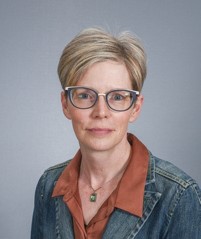
One seeking to give direction, the other seeking to receive it. In 2022, when Denise Kuo and Heather Drought were matched through the CSE mentorship program, they were at different points in their careers. “I’ve often been in a position to train people, and I found that relationship at work to be gratifying,” Kuo said. After nearly 2 decades in various editorial roles, she felt ready to guide others interested in managing publications. Meanwhile, Drought, an assistant managing editor at the Association for Diagnostics & Laboratory Medicine, was looking to advance in her role. “I was hoping for guidance on how to set things up, address certain tasks or questions, and maybe find a way to move my role forward,” she said.

Kuo and Drought, who hadn’t known each other beforehand, started their first conversation simply trying to get a sense of each other’s personalities. They used CSE mentorship resources as a starting point, building talking points for the next meeting, and trying to structure their relationship.
For Kuo, those early conversations were exploratory and included learning what Heather’s job was like and how she might help. The hardest part was figuring out the goal. Drought said, “It took me some time to even formulate in my head what I wanted. Talking it out—going through some of the introductory questions and the follow‑up questions Denise asked—helped create a path that really wasn’t there at the beginning.”
As Kuo and Drought met monthly, they gradually found a rhythm. They talked through what Drought was experiencing at her workplace. “I would ask all these questions as if I were the colleague next door, trying to help her problem‑solve. It was really about saying, ‘Let’s help Heather work through this particular thing,’” Kuo said. Kuo would then consider how she would handle the same situation and offer suggestions based on what she had done, or what she had seen colleagues do successfully.
At the time, Drought was beginning a project that entailed reorganizing the editorial board of one of her organization’s journals. She was unsure how to navigate this project, especially because she felt steeped in a certain way of doing things at her workplace, and she sought inspiration to see alternatives. Talking with Kuo helped her work through the challenges. Kuo provided an outside perspective and became a sounding board who could listen and respond with a broader range of experience. “Being able to ask questions—whether I thought they were silly or core—was incredibly valuable. Having that kind of outlook made a real difference,” Drought said.
Kuo and Drought also developed an effective way to maintain momentum. At the end of each meeting, Kuo would give Drought an assignment to help her remember what they had discussed and reach a point where new action items emerged. “Looking back at my meeting notes, there were always things listed that were basically action plans for the next time we met. Whether I always completed them or only got partway there, it gave me some accountability, so the project didn’t stall,” Drought recalled.
As the pair continued working through the uncertainties that Drought faced, she completed the project. Everyone involved was pleased with the editorial board’s reorganization. But a more meaningful change for Drought, who has now been promoted to managing editor, was in her approach to her work. She learned from Kuo how to communicate with her supervisor more effectively. Drought came to realize that in presenting ideas, she should support them with data and initial development. She now feels more confident proposing new ideas, and she perceives that this approach has improved her work.
Watching Drought and other mentees grow has been satisfying to Kuo, who now has her second CSE mentee. “Whether that growth is feeling confident enough to raise something with their supervisor, starting to manage their own team, or trying a new technology or task they haven’t done before, I want to celebrate with them,” Kuo said. “When they’re willing to take a risk and try something new, and it turns out well, it’s fantastic. And even when it doesn’t, if they step back and reflect on it, we can talk about whether they’d try it again or try something different. That willingness to reflect is amazing, too.”
That growth goes both ways. Each mentee brings distinctive goals, strengths, and areas to improve, giving the mentor a chance to practice different mentoring skills and gain new perspectives. For Kuo, working with Drought was a good exercise in listening. She learned to give Drought the space to talk through what was happening at work; by listening instead of jumping in, she could better notice Drought’s word choice and tone and offer more thoughtful suggestions. “If you’re talking too much, you can’t hear what the other person is saying, so I had to stop and listen, and that was important,” Kuo said. She also has liked hearing how people in other organizations approach similar work differently and thus being reminded of how much colleagues across the field can learn from one another.
Their interaction has shaped how Drought and Kuo think about the CSE mentorship program. Drought said she feels that the program can support many kinds of ambitions, helping people pursue their goals or grow professionally. “I’d also say to try to keep an open mind, because you really have no idea what’s going to come out of it,” Drought said. Kuo emphasized that the willingness to learn matters just as much as having a goal. “Whether you have a specific idea of what you want to accomplish, you still want a relationship that puts you in a position to learn,” she said.
Although CSE mentorships officially last 1 year, Kuo and Drought continue to connect. “It’s a valuable program in the sense that it gives you support. Even if it hadn’t moved Drought’s position forward, I would have hoped Drought came away feeling she’s not alone,” Kuo said. “That she has people outside her organization she can rely on—people who can answer questions and help her problem‑solve when she needs it.”
Ye (Vivian) Chen (https://orcid.org/0009-0001-3984-7933) is a graduate student in science and technology journalism at Texas A&M University.